Children
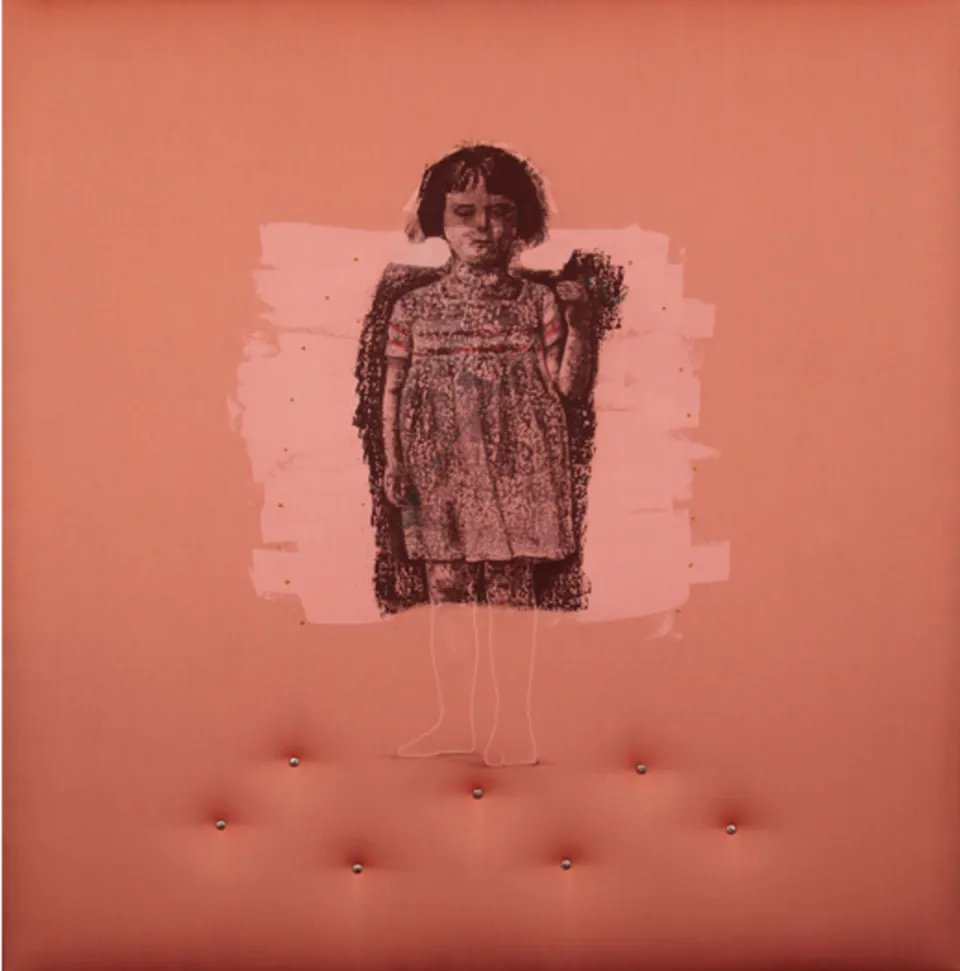
Children
The presence of certain recurring elements in our daily lives and their compulsive repetition often quickly become a matter of indifference, with little hold on our consciousness.
Equally compulsive is the presence of violence, injustice and the many forms of oppression. All this reaches us, at best, filtered through statistics, tables and explanatory diagrams that dilute the horror into figures and indicators concerning the rise or decline of this or that affliction. Without these filters—understood as synonymous with truth and reason—our sanity would hang by a thread.
Paradoxically, whilst these filters fulfil their reassuring function, the official images broadcast of misfortune are consumed avidly; perhaps as a palliative for our own morbid curiosity, perhaps as a psychological equilibrium protected by the distance that allows us to place ourselves far enough away – not only geographically – from the epicentre of crime, disaster or brutality. Nevertheless, reflection on these sequences is not alien to us, and we can discern in them the end of certain orders of things.
In this universe of everyday images, those depicting child labourers reduced to miserable living conditions often find their clearest recognition in oblivion. Even further removed are those of child assassins or children caught in spirals of violence, turned into commodities by organised mafias shielded by corruption. Turning our gaze towards that other child (and our own reflection therein) thus becomes a rarely sought-after exercise, for this introspection will lead us, in one way or another, back to our own childhood realm with its particular shadows and precariousness.
Building on a technique previously employed in the series *Lucubre* (2010), which explored eroticism, Paolo Vigo moves beyond the mist of *Spleen* (2010) to continue probing the neutrality of the almost raw canvas. Succinctly titled *Children*, this new selection of works aims to open up a space frozen in denied childhood, offering, above all, the chance to confront that other gaze which, for a moment, will yield ground to passivity.
By minimising the ornamental elements that usually form part of his artistic language, Vigo grants the power of his drawing the authority to bring these anonymous portraits to the fore – as well as the objects or evocations that allude to their possible stories – in an effort to restore to them the central role in their own experiences and, in a generous gesture, to restore to them the right (not enshrined in the constitution) to dream and to be masters of their own destinies.
Valeria Quintana Revoredo
August 2011