Spleen
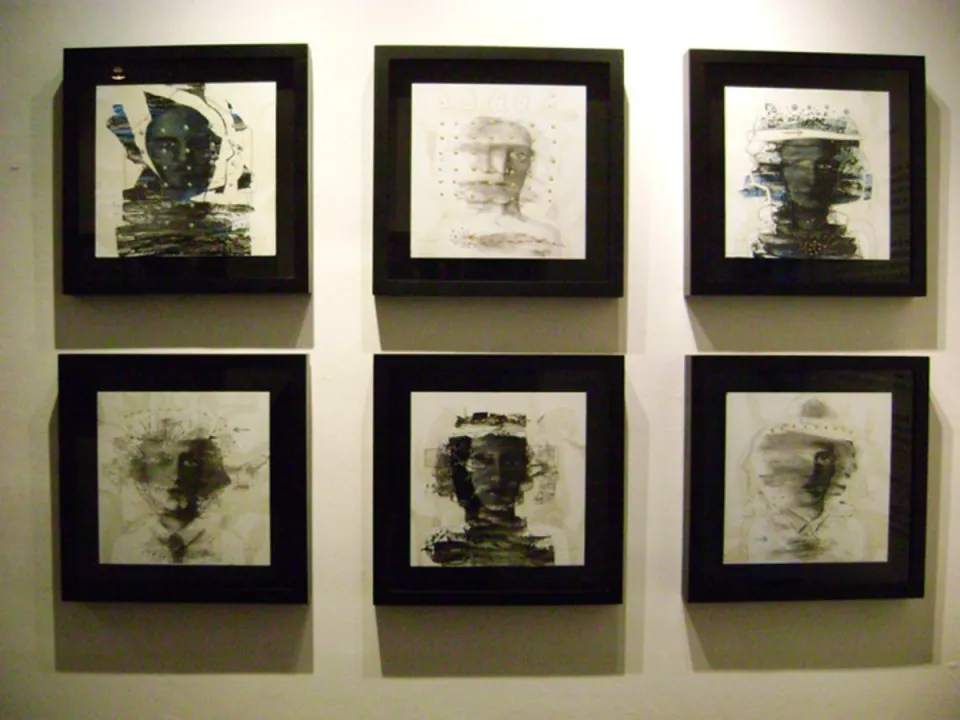
Spleen
On dark vexation and slow bitterness
Which weigh heavily upon human existence
Blessed is he who, with vigorous wings,
Soar to the vast realms of eternal beauty.
‘Elevation’. Charles Baudelaire
Faced with their perpetual duality, human beings have waged long and gruelling struggles in an attempt to separate what is intrinsically linked. Our most striking duality—and the principal source of both philosophical and aesthetic concerns—has established one of the cornerstones of reflection in modern thought: the tension between the material and the spiritual. On the surface, this issue now seems to be taken for granted. But only on the surface.
The twentieth century and its successive declarations of the death of all that is ‘sacred’ brought to the fore a sense of rupture and unease in the face of the imminent dehumanisation of culture and the course of events. In our own time, the nakedness of the human soul—increasingly marginalised in the face of despicable objectification—becomes hazy and distant, and its anachronistic and uncomfortable emergence is even called into question. Fragmented, caught in the jaws of technological progress, in the banality of immediacy and its ridiculous extremes, in the cruelty of social injustice, human beings continue today to drag their curse and their sorrow behind them, finding no solace in any of the illusions so skilfully orchestrated for their futile enjoyment.
Having reached a chronic state of grief, the body surrenders to a catatonic stupor, waiting to ‘feel’ something. And it is this liberation, emerging from a state of melancholy, that can bridge the terrible chasms that tear through the soul and halt, for an instant, the pain of existence.
In Paolo Vigo’s paintings, anonymous figures, hazy to the point of incorporeality; strive to grasp something that eludes them – fragments of memories, scraps of landscapes and bodies transformed into symbols of something longed for – crowding together in a single tangle that transforms them, no longer as central figures, but as divided elements forming a single fabric. This new fabric thus becomes an unknown space, in which that chaos may point to a possibility.
The once-elusive fragments are now bound together, thus transcending the pain of infinite losses, of merciless forgetfulness, of silenced stories over which heavy veils were drawn – and today they dare to lift a corner of the dusty curtain.
Valeria Quintana Revoredo